


Last week I ended with a question that has been echoing in my mind: why does Mary Magdalene continue to capture the spiritual imagination of so many people today?
A good place to begin exploring that question is with the earliest sources we have—the Gospel accounts themselves. Long before centuries of interpretation, legend, and symbolism began shaping how people understood her, Mary Magdalene appears in the New Testament as a devoted follower of Jesus and a witness to some of the most significant moments in the Gospel story.
Magdalene of Magdala
The Gospels tell us that she came from Magdala, a town on the western shore of the Sea of Galilee. Like many of Jesus’s followers, she seems to have been part of the small community that traveled with him during his ministry. In the Gospel of Luke, she is described as a woman from whom Jesus cast out “seven demons,” a phrase that scholars generally interpret as a reference to healing or liberation from suffering rather than a literal description of possession.
The Gospels don’t tell us where Mary Magdalene’s resources came from, but Luke places her among the women who “provided for [Jesus and the disciples] out of their own resources,” suggesting she was a woman of some means and independence, not a marginal beggar on the edge of the story.
Witness to the Crucifixion and the Empty Tomb
From that point forward, Mary Magdalene appears repeatedly in the narrative surrounding the final days of Jesus’s life. While many of the disciples disappear from the story during the crucifixion, the Gospels consistently record that Mary Magdalene remained present—standing near the cross, witnessing the burial, and returning to the tomb after the Sabbath.
For many historians, this detail is striking. In the ancient world, the testimony of women was often considered less authoritative in legal and public settings. Yet the Gospel narratives consistently place Mary Magdalene at the center of the resurrection story, presenting her as the first witness to the empty tomb and the first to encounter the risen Christ.
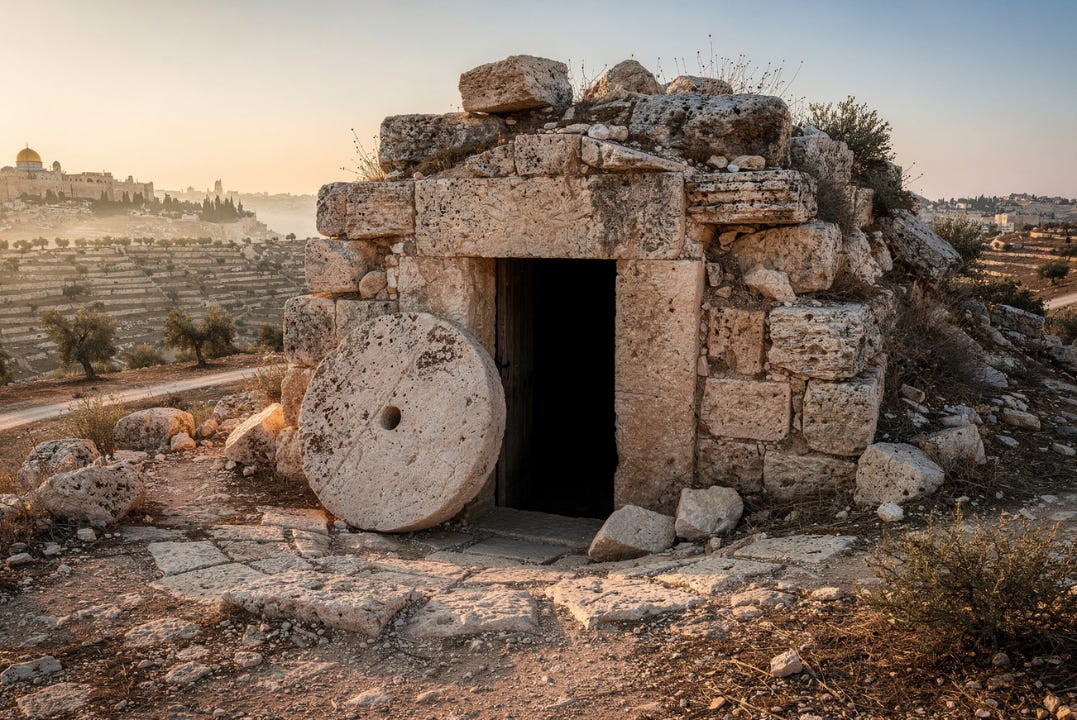
The First Witness to the Resurrection
In the Gospel of John, Mary Magdalene arrives at the tomb early in the morning and initially mistakes Jesus for the gardener—a small but evocative detail that has intrigued readers and interpreters for centuries.
Some readers have also noted the quiet symbolism of this moment. The resurrection story unfolds in a garden at dawn, imagery long associated with renewal and new life. For a narrative that centers on resurrection, the setting itself echoes themes of spring, restoration, and the beginning of something entirely new.
In the Gospel of John, the moment unfolds quietly. When Jesus speaks her name—“Mary”—she suddenly recognizes him. It is a deeply human moment of recognition after grief and confusion. According to the narrative, Jesus then entrusts her with a remarkable task: to go and tell the disciples that he has risen.
In other words, the first proclamation of the resurrection in the Gospel story comes through Mary Magdalene. In the centuries that followed, early Christian writers would refer to her with a striking title: apostola apostolorum—the “Apostle to the Apostles.” The phrase reflects the simple but profound role she plays in the narrative: she is the one sent to announce the resurrection to those who would later become the leaders of the early Christian community.
This moment has captured the attention of theologians, historians, and spiritual readers for generations. In a story where many of the disciples disappear during the crucifixion, the Gospels consistently portray Mary Magdalene as remaining present through the final events—at the cross, at the tomb, and at the moment when the resurrection is first revealed.
Seen in this light, the biblical Magdalene emerges not as a marginal figure, but as one of the most faithful witnesses in the Gospel story. Yet the way Mary Magdalene would later be remembered in Christian tradition would become far more complicated. Over the centuries, interpretations of her identity began to shift, and assumptions about her story took hold that were not always rooted in the Gospel texts themselves. Understanding how that happened is the next step in exploring why her story continues to fascinate so many people today.
If you find yourself, like me, wanting to move from simply knowing her story in the texts to asking what it might mean for your own, I’ve created a companion series for paid subscribers that explores that shift more personally. Part 1 of the series is available to free subscribers here:
If something has been stirring in you this spring — the quiet knowing that this chapter wants to be different — I created something for that.
The Untamed Threshold is a six-month initiation for the woman who is ready to stop managing her disappearance. Eight women. Application only.